
The problem
Elections give power to those who crave it. Successful politicians aren’t the wisest or most aligned with their constituents; they’re the best at playing a cynical game.
A ROUTLEDGE OPEN ACCESS BOOK
We all know democracy means electing politicians. We’re all wrong. We can’t achieve rule by the people by electing elite leaders.
If democracy means what the word says, everyday people must genuinely hold power. Democracy Without Politicians argues that such a reframing could drastically improve policy outcomes and civic life.
In ancient Athens, democracy didn’t mean elections, it meant sortition, or lotteries. Just like in juries, everyday people chosen by lot gathered, learned, deliberated, and arrived at decisions.
Democracy Without Politicians explores the deep flaws of elections, the rich benefits of sortition, and the vast possibilities for reorganizing our governance to support dramatically healthier representation and deliberation.
The central claim
Elections give power to those who crave it. Successful politicians aren’t the wisest or most aligned with their constituents; they’re the best at playing a cynical game.
Sortition chooses everyday citizens by lot, creating a representative portrait of the public whose only incentive is to solve the problems before them.
Networks of deliberative bodies, each with specific responsibilities and access to diverse experts, could yield policy truly by and for the people.
If democracy means rule by the people, why do the people never actually rule?
What readers say
“I've known and worked with Terry for decades, and his new book is a thought-provoking and deeply-researched take on how democracy might be reformed to genuinely allow government by the people.”
"I live in a small Vermont town where we govern ourselves--pretty darned well--by annual town meeting, where everyone participates. So I think we should take seriously the idea that governing doesn't require a special caste of life-long officeholders, and that all of us are actually up to the task."
"This book pulls together decades of research and critique on random selection as a replacement for elections in democracy. Bouricius argues that the failure of elections is inevitable owing to the very nature of individuals and societies, then explains why choosing representatives through a sortition system can overcome these problems and deliver on the promise of democracy as the best means of governing ourselves."
"The likes of Jefferson, Madison, and Adams feared that an oligarchy of wealth, rather than of virtue and talent, might come to rule through elections. In this important new book, Bouricius meticulously explains why elections have failed to achieve democratic rule, or even the bare minimum of holding politicians to account. By reviving the ancient democratic tool of sortition—citizen juries—he shows us how to bypass the bought-and-paid-for political class and finally realize the promise of a government 'by the People."
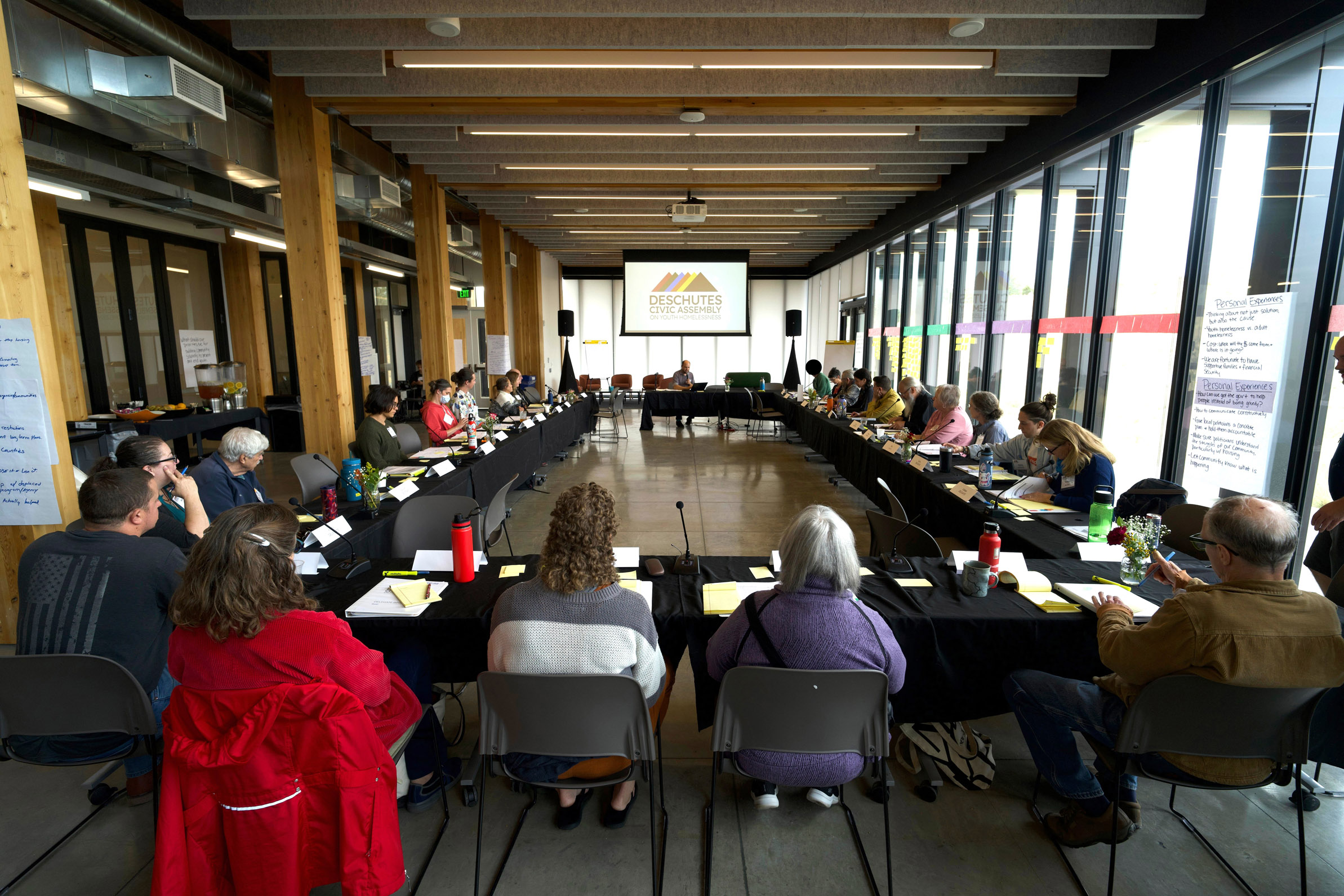
Citizens at work
Randomly selected citizens’ assemblies are already being used around the world to take on difficult public questions. More than 1,000 have been held since 2004, and in some cases their recommendations have gone on to become law or been put directly to voters.
Ordinary people can study evidence, hear from experts and advocates, deliberate with one another, and make considered public recommendations—without campaigning for office first.
Explore Terry’s researchThe author

The book is open access
A practical argument for moving democracy beyond elections and giving ordinary citizens a direct share of public power.